A jacket you saw in a video, a discount that ends tonight, a checkout page as polished as any big retailer's. Fake shops rarely look fake. They often look better than real ones, because someone spent an afternoon copying a template and typing "Only 3 left" in red. What gives them away are boring, repeatable details: the domain, the contact page, the reviews, the way they take money. Five minutes of checking before you enter your card number is usually enough to spot them.
Start with the web address, not the product
Look at the URL before you look at anything else. Bogus stores lean on small variations: extra words, hyphens, brand names jammed up against words like outlet, official, clearance or sale. Something like brandname-outlet-store.com is not the brand's real domain and never will be. Neither is a familiar name sitting under an ending you rarely see on real shops in your country.
Then check how old the domain is. A free WHOIS lookup shows the registration date. If a store claims decades of trading and the domain was created a few months ago, that contradiction is your answer. A new domain is not proof of fraud — honest small shops open all the time — but new, plus slick, plus very cheap, plus no verifiable address is a pattern worth walking away from.
One thing the padlock does not mean: HTTPS and the lock icon only tell you the connection is encrypted. Certificates are free and take minutes to get. A secure connection says nothing about whether the seller will send you anything.
Read the About and Contact pages like a skeptic
Real businesses can be found. Look for a company name, a physical address and a phone number. Then search them separately. Does that address appear anywhere else online, or does it point to a residential block or a virtual office? Does the phone number come up in connection with an actual trading business, or only on the same site you are already unsure about?
Email is another tell. A tiny shop might use a free consumer address, but a store processing thousands of orders usually writes from its own domain. More revealing is what happens when you ask something specific. Send one concrete question — "Does the medium run small, and what address do I return a UK order to?" A real shop answers it. A fake one replies with a paragraph about being committed to customer satisfaction, or not at all.
Details that get copied and forgotten
Policy pages are where sloppy fakes slip. Scroll through shipping, returns, terms and privacy. Watch for:
- A different company name or country buried in the small print
- Placeholder text, broken formatting or paragraphs that obviously belong to another shop
- A returns address that does not match the address on the About page
- Return terms designed to be impossible: tracked international shipping at your cost, restocking fees, tight windows
- No terms, no privacy policy, no company number anywhere
Reviews live outside the shop
Testimonials on a store's own site prove nothing. Anyone can type five glowing quotes and pair them with stock photos of smiling people who do not exist.
Search the shop's name off-site instead: independent review sites, forums, community groups, and the brand's own website if the shop claims to be an authorised stockist. Try the domain plus the word "reviews", and the product name plus "scam". Read past the first page of results; that is usually where the real complaints sit.
When you find reviews, read the middling and negative ones first. They describe how a shop behaves when something goes wrong — late delivery, wrong size, refunds ignored. Also notice batches: ten five-star reviews posted in the same week, written in the same tone, none mentioning anything specific about the product itself. And run the product photo through a reverse image search. If the same picture appears on a dozen unrelated domains, you are looking at a shop that borrowed its catalogue.
Payment methods are the clearest signal
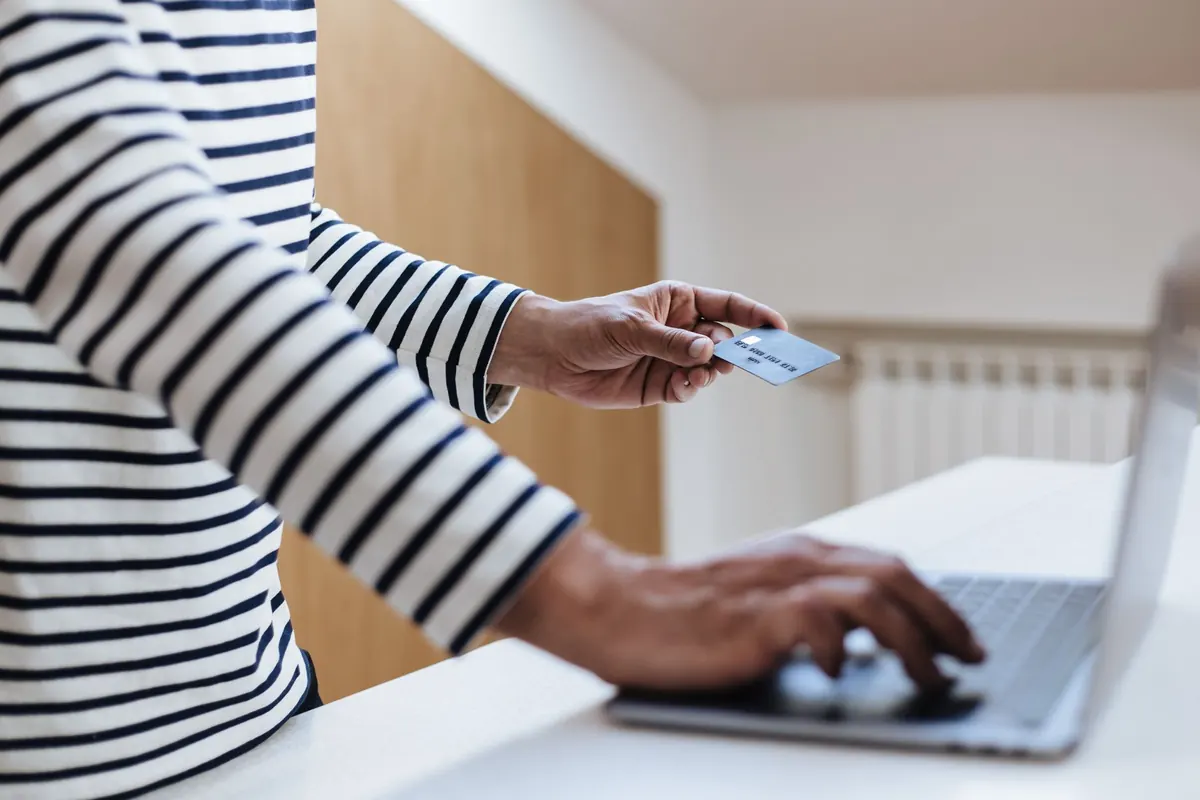
This is where fake stores get careless. A genuine retailer wants ordinary card or provider payments, because that is how normal businesses operate and because card payments give customers a route to dispute a charge.
Treat these as stop signs:
- Bank transfer or wire transfer as the only accepted method
- Cryptocurrency, gift cards or payment apps
- PayPal "friends and family", which strips buyer protection
- Being asked to pay by email, chat or phone, outside the site's checkout
- A checkout requesting more than it needs: card PIN, online banking login, a photo of your ID
If a shop steers you toward a method with no way back, that is not a quirk of its checkout software. It is the business model. Dispute rules vary by card issuer and country, so ask your bank what protection actually applies before you count on it.
Prices, timers and other pressure
Deep discounts on things that are normally hard to find — the console sold out everywhere, the designer bag, the concert ticket — are bait. So are countdown timers that reset when you reload the page and stock warnings that never change.
Check the arithmetic as well. Shipping that only appears at the final step. A currency that does not match the country the shop claims to trade from. "Free shipping" that becomes a handling fee. And read the returns page before buying rather than after. Any shop selling you something should be able to tell you where to send it back.
A two-minute check before you pay
- Reverse image search the main product photo.
- Search the domain with "reviews" and with "scam".
- Run a WHOIS lookup and note the registration date.
- Confirm a company name, address and phone number exist off-site.
- Check that checkout offers a payment method with real buyer protection.
- Read the returns policy and find a named address and timeframe in it.
If your details are already in
Act quickly. Call your bank or card issuer, explain what happened and ask what can be done about stopping or disputing the payment. Keep everything: order confirmation, emails, screenshots, the web address you paid on. Report the site to your national consumer protection body or fraud reporting service. Reports feel pointless in the moment, but they are how these operations get shut down and how the next buyer gets warned.
If you created an account and reused a password, change it everywhere that password appears and switch on two-factor authentication. Watch your statement for the next couple of months for small test charges, which are often the first sign a card number has been traded on.
Then reset. Buy from shops you can find, contact, and check out somewhere else. A few minutes of looking costs nothing, which is a fair trade against a payment you never see again. If real money or your legal rights are involved, speak to your bank or a consumer adviser about your specific options rather than relying on general guidance.
Photo: Ron Lach / Pexels